From a young age I felt big, I remember at primary school being weighed and labeling myself ‘big boned’, ‘broad shoulders’ and feeling uncomfortable about being bigger than my class friends. Looking back at photos, it is sad to think at the age of 10years old I was already comparing my body to those around me. Paired with having round glasses, I did find myself being picked on. I used to walk past the magazine shelf in our local newsagent and glance at the pictures of the tall, elegant women on the front page. Why couldn’t I look like that? The slimmer girls at school always seemed the happiest, they had more friends, they got more attention, and they were more likeable. I wanted to be happier, I wanted to fit in and to be accepted. As I was determined young person, I didn’t want to accept this and thought – maybe I do/can have control over this. Being smaller WILL make me happier. After all the most famous model of the 90’s, Kate Moss frequently said a quote which quickly became my go-to mantra – ‘Nothing tastes better than being skinny’ (this is a very tongue in cheek comment). The sad thing is, I believed this, and this was in fact my introduction into diet culture and dangerous habits which would take years to unpick. I am sure, if you are reading this, you will relate to this in some ways. It isn’t a new thing, for decades the pressure has been there to look a certain way to fit into gender norms or rather expectations.
Fitting in became my main motivation, and sometimes I look back and think this might have been why I spent many years people pleasing and putting others before me thinking this would mean I would be accepted. Maybe due to my geekish look, I didn’t fit in with the ‘cool’ kids, so I gravitated towards the smarter kids in the class as my friends. However, found it difficult to truly fit in there too when I found myself dropping into lower sets for subjects – most likely because of my dyslexia. I didn’t feel clever enough, and I didn’t feel pretty enough. I was left in a weird space. My parents have called this time in the past as my ‘identity crisis’ as I struggled to understand who I was meant to be.
Maybe this was a saving grace for me, maybe not but randomly, my swimming did start to take off and this became my new identity, and my identity crisis was now over. I was so proud of this, everyone was proud of me, I finally found my thing. I would train 10x a week and was fully committed to each session and being the best. Due to the world’s new obsession with weight and of course body mass index scores, it became a thing within the sporting world, to monitor athletes’ weight. It was mostly to monitor dehydration apparently, but I saw this as a challenge to perfect my athletism and worthiness of the athlete title. It did become an obsession, and I took to relatively extreme measures to ensure my weight didn’t budge each week. Being slimmer and swimmer was not seen as a bad thing at all, especially back then. After all, ‘the lighter you are, the faster you go’ were also common phrases I would hear along with ‘pinch and inch, lose an inch’ amongst other athletes and sometimes coaches. I am not sure anyone back then realized the harm these phrases could or would cause so many young people.
Did you know it is thought that 1.25 million people in the UK have an eating disorder, a prevalence of 1.8%? Even more interesting, a study that was conducted on athletes showed that between 6-45% of female athletes 0-19% of male athletes suffer or live with an eating disorder, (Bratland-Sanda et al, 2013). So, this isn’t a small problem, it is impacting lots of people and due to little knowledge, awareness and understanding around the signs and how to have a supportive conversation. My guess is that statistics are now higher because we are more exposed to diet culture in some ways but lower because we are in general starting to become more aware. Or are we feeling more comfortable talking about it, so numbers have increased? I have struggled to find statistics to compare – probably because more research needs to be conducted.
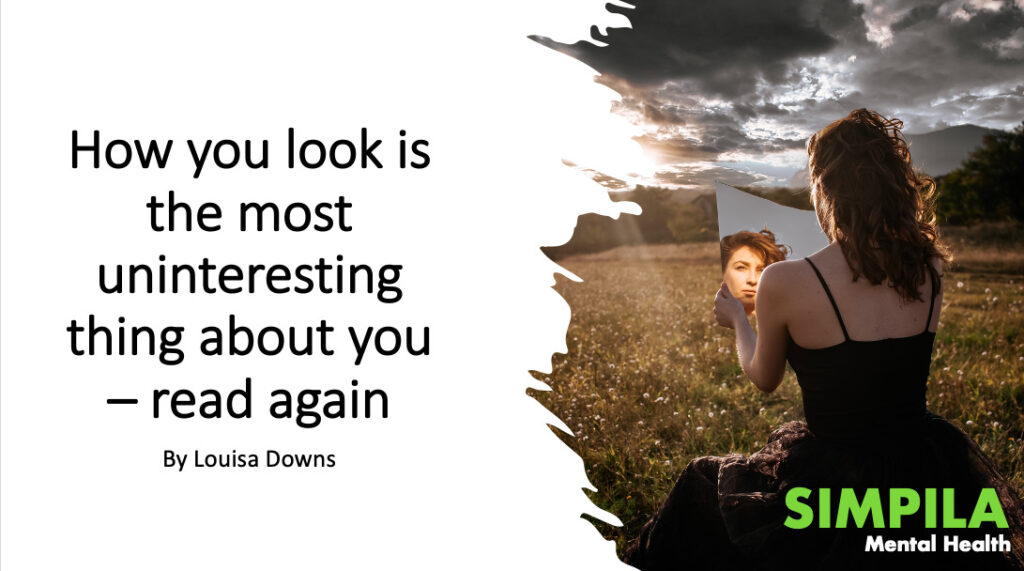
I am grateful that I have been lucky enough to break free from the vicious cycle that living with strict rules and that level of control can bring. Even 20 years or so later from being that vulnerable and easily influenced young person. I would be lying if I said that recovery is ability to forget the rules you spent so long living by, the number of steps you need to do to burn a certain food item off or if you slip up with your eating, how to compensate the next day. But more so about having food freedom, no rules, understanding that how you look is the most uninteresting thing about you and that in years to come, no one will remember how much you weighed – rather the impact you made.
So, what helped me heal? Actually, understanding my worth. I didn’t receive professional help, even to this day, I am not sure anyone around me suspected the measures I was going to, to look the part. But learning about me, who I am outside of being the ‘sporty’ one, outside of being the ‘outgoing’ one, I have found a new, more authentic me. Becoming a mother has certainly helped, having a partner who sees more than just ‘Louisa, the swimmer’ and spending time finding and celebrating other talents I have. I also find that in a world where social media has such an impact on our mental health, it is important to fill your feed with positive role models (people of all shapes, sizes, race and orientation) because only then do you realise that you are very normal and that that is perfectly perfect. It’s funny how life experience can give you this. Very unfair also, as young people in the thick of it to understand that time can sometimes be a healer. This however not to say that this is the answer to everyone’s relationship with food, themselves and their bodies. But as we all know, early intervention is key.
How can we do better?
- Awareness and Education – attend mental health first aid training.
- Reduce stigma around mental health – be a mental health advocate and share your learnings from training.
- Know where support is – be in the know of what charities and support is out there.
- Sign and support campaigns to make professional help more accessible. #DumpTheScales campaign lead by Hope Virgo is a campaign to make it easier for those struggling to get the help they need and deserve.
So, wherever you are with this, reading this to understand more, reading this because you are living this now or even supporting someone. It isn’t an easy road, and there are professionals who can help. You do not need to do this alone. Look at some resource below. Take care.
https://www.beateatingdisorders.org.uk/
https://www.nhs.uk/mental-health/feelings-symptoms-behaviours/behaviours/eating-disorders/overview/
References: